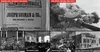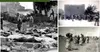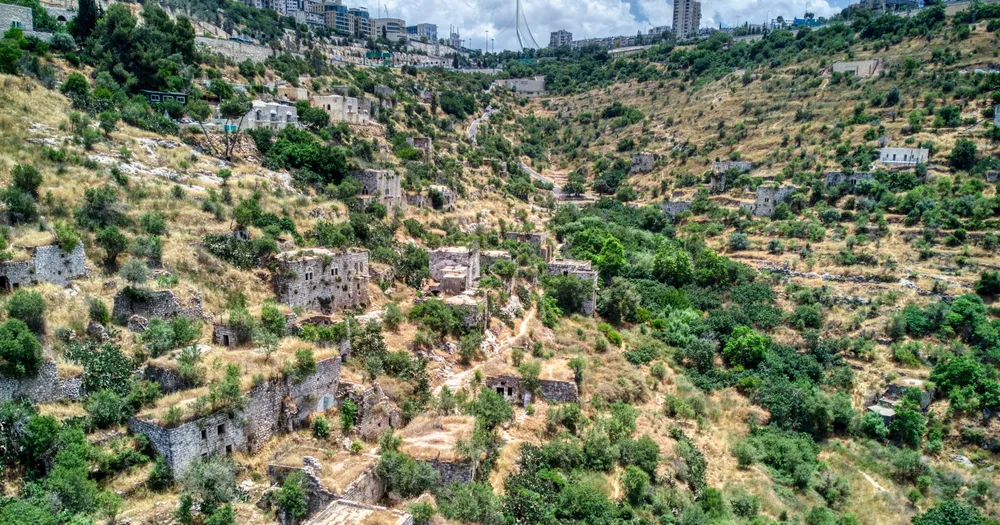
Drive into Jerusalem from the west and you pass a Palestinian village. Its stone houses sit on the terraces below the highway, some roofless, some almost whole. Nobody has lived in them since early 1948.
The village is Lifta. It is one of more than 400 Palestinian towns and villages emptied in the Nakba, and the only one of them still standing largely as it was left.
Lifta appears in Ottoman tax records in 1596 with 72 households. By the 1945 Village Statistics it had 2,250 residents and 8,743 dunums of land. Its own former residents put the number at around 3,000 people in some 600 homes. Under the British Mandate it had a clinic, two coffeehouses, carpentry workshops, a butcher and a mosque, built around a spring that still runs.
On 28 December 1947, gunmen from the Zionist militia Lehi, known to the British as the Stern Gang, opened fire on one of Lifta's coffeehouses. Six people were killed and seven wounded. Many families fled in the days that followed. Attacks continued through January, including the burning of the mukhtar's house, and by early February 1948 the village was empty. That was more than three months before the State of Israel was declared.
Its people and their descendants now live in East Jerusalem, Ramallah, Amman and beyond. Israel does not allow the refugees of 1948 to return. Many of them can see their village from the road, and cannot go home to it.
Most of the villages emptied in 1948 were bulldozed or built over. Lifta was left alone, at first because no one got round to it. Between 55 and 75 of its houses survive, depending on how ruins are counted.
That has made it a target. In the late 2000s the Israel Land Authority put Lifta's land up for sale for a luxury development of 212 homes, with most of the old houses to be demolished. In 2012 the Jerusalem District Court cancelled the tender and ordered a full heritage survey first. The Israel Antiquities Authority's survey, completed in 2016, found settlement going back thousands of years and described Lifta as the most significant Arab village in the region. In July 2017 it was declared a national nature reserve.
The pressure did not stop. In 2018 the World Monuments Fund placed Lifta on its watch list of endangered heritage sites. It is on UNESCO's tentative list of World Heritage Sites. In May 2021 the Israel Land Authority announced a new tender for about 259 luxury units, a hotel and a shopping centre. Former residents and their descendants went to court and campaigned against it. In August 2022 the Jerusalem municipality and the Land Authority shelved the plan. The mayor now speaks of turning it into a heritage and tourism site.
None of the plans, whether luxury flats or a heritage park, include the people who were driven out.
"Memory and history are life itself, and I will allow no one under the sun to take away my memories, nor my heritage and that of my ancestors," Yaqoub Odeh, who was born in Lifta in 1940 said.
Lifta was a village for centuries before 1948, and Israel still bars the families driven out of it from coming home.