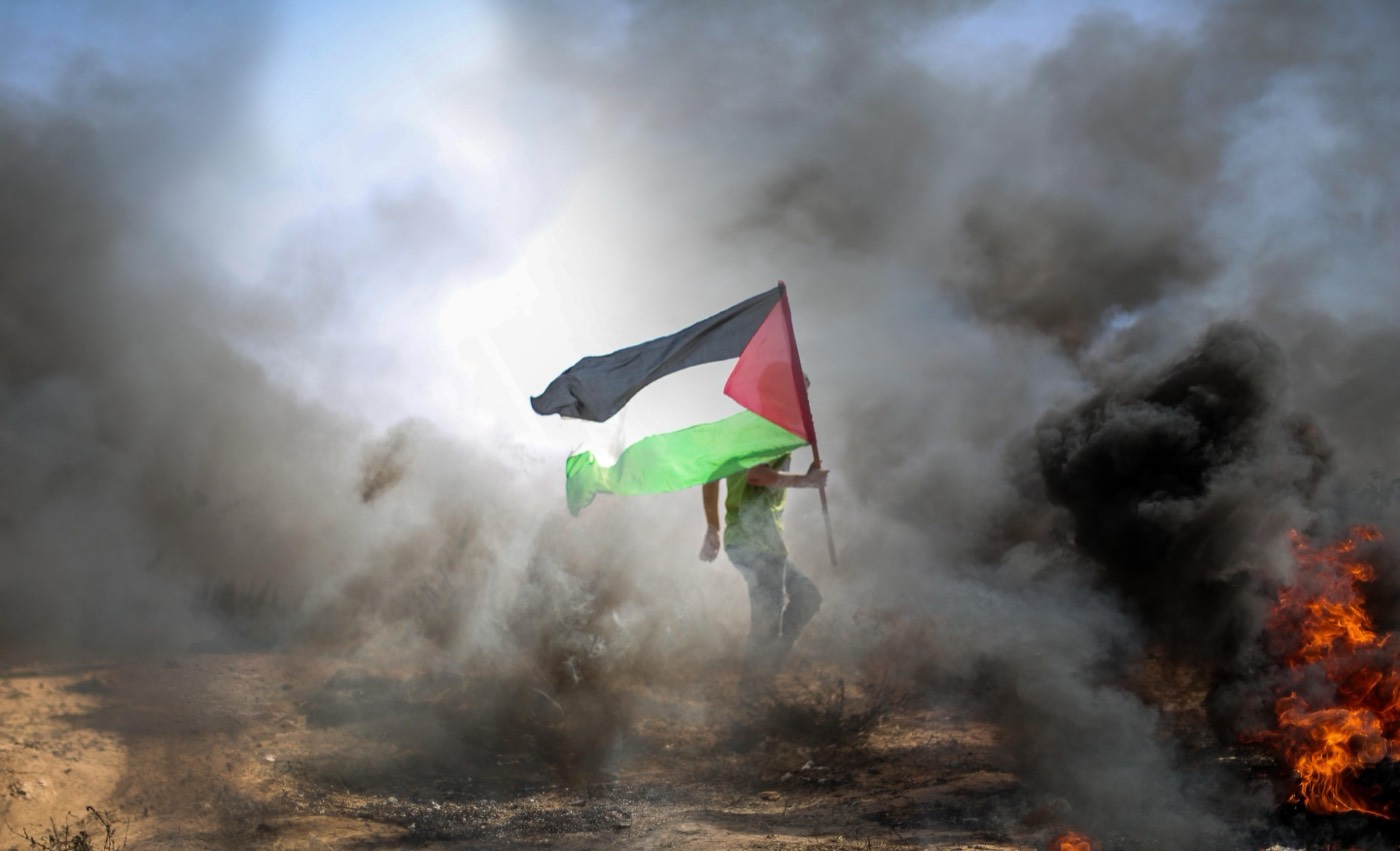
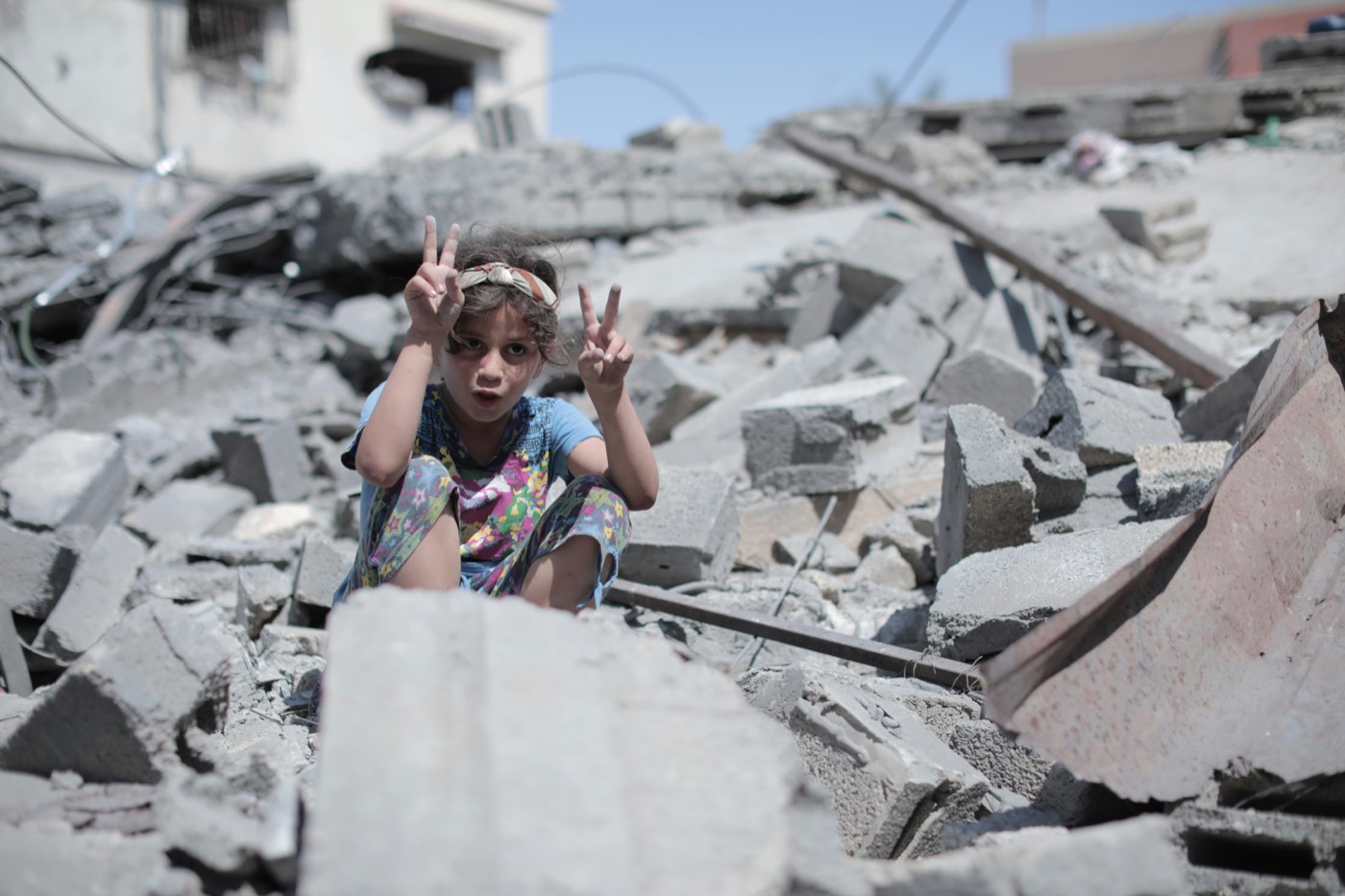
The experts whose work is atrocity crimes have reached their answer on Gaza, and it is genocide. The UN Commission of Inquiry found in September 2025 that Israel was committing genocide, and on 26 October 2026 it reported that Israel kept "committing genocidal acts with the genocidal intent to destroy, in whole or in part, the Palestinians in Gaza" through the so-called ceasefire. Navi Pillay, who led that commission until November 2025, won the Nobel Peace Prize on 9 October 2026.
The International Court of Justice ruled in January 2024 that the right of Palestinians in Gaza to protection from genocide is plausible and ordered Israel three times that year to prevent genocidal acts. Israel filed its defence in March 2026 and used it to object to the court's jurisdiction, and the court has given South Africa until 22 November 2027 to reply and Israel until 22 May 2029 to answer, so a final ruling is years away. The strongest voices in the meantime are the people whose work has long centred on atrocity crimes, from the Lemkin Institute and Genocide Watch to Israeli scholars such as Raz Segal and Amos Goldberg, joined by international lawyers and hundreds of scholars worldwide.
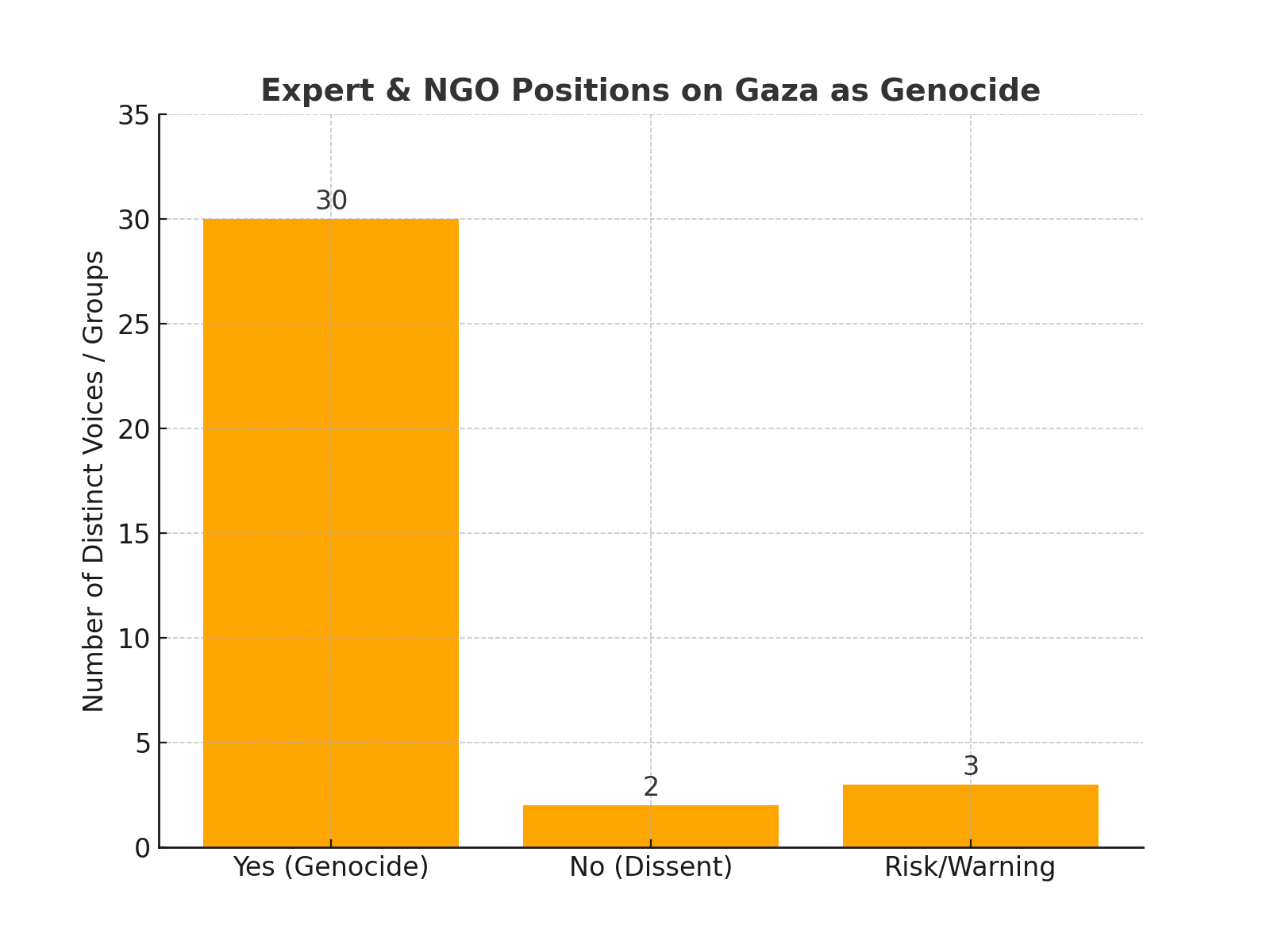
This piece brings those voices together, from NGOs to Holocaust historians and from Israeli rights groups to Western universities, along with the few who remain cautious about proving intent.
Amnesty International: “Israel has committed and is continuing to commit genocide against Palestinians in the occupied Gaza Strip.” In November 2025 it found the genocide continuing despite the so-called ceasefire.
Human Rights Watch: found Israeli authorities responsible for the crime against humanity of extermination and for acts of genocide, through the deliberate deprivation of water.
Physicians for Human Rights Israel: concluded that Israel is committing genocide, set out through the deliberate destruction of Gaza's health system.
B’Tselem (Israel): concluded in its report “Our Genocide” that Israel is committing genocide in the Gaza Strip.
European Center for Constitutional and Human Rights (ECCHR): “there is a legally sound argument that Israel is committing genocide against the Palestinians in Gaza.”
Lemkin Institute for Genocide Prevention: keeps Gaza on its active genocide alerts.
Genocide Watch: “Together, these actions demonstrate intent to commit genocide.”
Forensic Architecture: mapped the destruction of Gaza's homes, farmland, hospitals and aid routes in “A Cartography of Genocide”.
Democracy for the Arab World Now (DAWN): called on states to meet their duties under the Genocide Convention and end the genocide, apartheid and occupation.
International Association of Genocide Scholars (IAGS): “Israel’s policies and actions in Gaza meet the legal definition of genocide.” The resolution passed on 31 August 2025 with 86 per cent of the members who voted.
Center for Constitutional Rights (CCR): warned in October 2023 of Israel's unfolding crime of genocide and of the complicity of the states that enable it.
University Network for Human Rights, with clinics at Boston University, Cornell, Pretoria and Yale: applied the Convention's standards and concluded that Israel is committing genocide.
Genocide and Holocaust Studies Crisis Network (GHSCN): scholars of genocide demanded an end to Israel's atrocities in Gaza.
Raz Segal (Israeli scholar): “a textbook case of genocide unfolding in front of our eyes.”
Amos Goldberg (Hebrew University): “Yes, it is genocide.”
Daniel Blatman (Hebrew University): wrote with Goldberg that there is no Auschwitz in Gaza, but it is still genocide.
Omer Bartov (Brown University, Israeli-born): “Genocide is the only term that fits.”
Ilan Pappé (Israeli historian): calls the destruction of Gaza genocide.
William Schabas (genocide law scholar): sees a strong case that Israel's response constitutes the crime of genocide.
Martin Shaw (UK genocide theorist): described an emerging consensus among genocide scholars as early as November 2023.
Ernesto Verdeja (Notre Dame): treats the Gaza genocide as meeting the definitional criteria.
Dirk Moses (genocide studies): uses Gaza to examine the concept of genocide and the destruction of a people.
TWAILR scholars: more than 800 scholars and practitioners warned of potential genocide in October 2023.
Scholars in Holocaust and Genocide Studies: more than 55 scholars said the mass killing, starvation and displacement raise the question of genocide.
Zoryan Institute: backs the IAGS resolution.
UN Commission of Inquiry, legal analysis (September 2025): found Israeli authorities committed four of the five genocidal acts in the Convention, including destroying in part the reproductive capacity of Palestinians in Gaza and deliberately inflicting conditions of life calculated to destroy them.
Francesca Albanese (UN Special Rapporteur on the OPT): found in “Anatomy of a Genocide” reasonable grounds to believe the threshold for genocide had been met, and in October 2025 named 63 states as complicit.
Michael Fakhri (UN Special Rapporteur on the Right to Food): says Israel is committing genocide through engineered starvation.
Balakrishnan Rajagopal (UN Special Rapporteur on Adequate Housing): warned that the mass destruction of homes in Gaza, domicide, risks acts of genocide.
Joint UN experts statement (November 2023): called on the world to prevent a genocide against the Palestinian people.
UN Commission of Inquiry (September 2025): “Genocide is occurring in Gaza,” Navi Pillay said, naming Isaac Herzog, Benjamin Netanyahu and Yoav Gallant as having incited it. Under its new chair, Srinivasan Muralidhar, the commission found in October 2026 that the genocide continued through the so-called ceasefire.
Not all scholars are in full agreement. Israeli international-law scholars Amichai Cohen and Yuval Shany argue that the evidence does not conclusively prove genocidal intent and warn against stretching the legal definition. Their critique focuses on methodology, particularly the interpretation of intent. Other scholars, such as Adil Ahmad Haque, counter that the statements of Israeli leaders and the scale of destruction satisfy the requirement of intent. Policy groups outside the genocide-studies field have echoed the caution, and many genocide scholars regard their interventions as political rather than scholarly.
The genocide prevention bodies, the leading NGOs, Israel's own human rights organisations, the UN's investigators and most genocide scholars have concluded that Israel's assault on Gaza meets the definition of genocide. A small group still asks for courtroom proof of intent before saying so, and the court that will give it has set its timetable into 2029.
Gaza's Health Ministry counted 74,653 Palestinians killed and 176,007 injured as of 11 November 2026, including 1,622 killed since the so-called ceasefire began in October 2025.